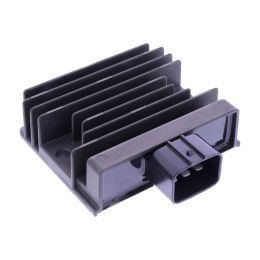

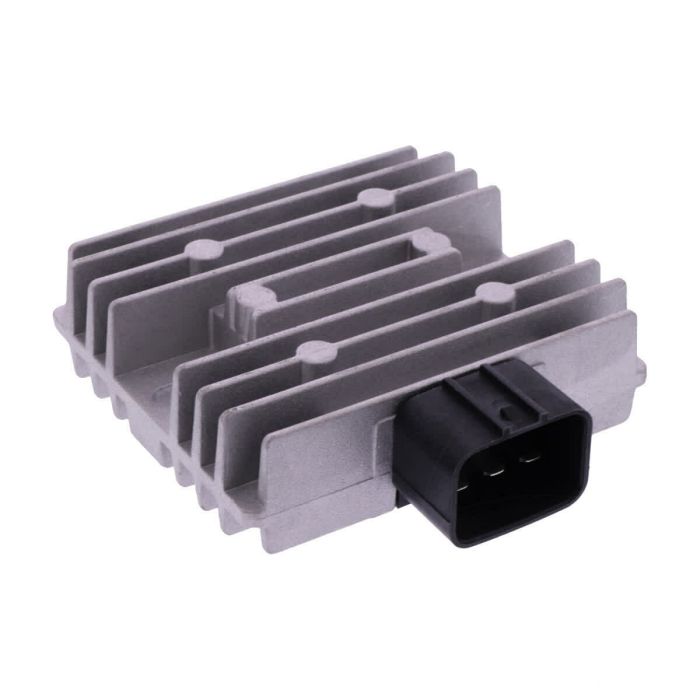
DZE 2519 Mosfet Voltage Regulator for Kawasaki

for KAWASAKI EJ W800, ELIMINATOR, KLE VERSYS, NINJA, NINJA SX, VULCAN 650 S CAFE, VULCAN S, Z RS, Z RS CAFE, Z650, Z900
Check the compatibility with your motorcycle
FIND YOUR BIKE - compatibility table
-6%
Special Price €120.30 Regular Price €128.00
The DZE Mosfet voltage regulator represents an innovation in the field of energy management for motorcycles, particularly for Kawasaki models. This device, designed with MOSFET technology, overcomes the limitations of traditional silicon-controlled rectifiers (SCR), offering superior performance and greater energy efficiency.
The growing demand for energy in modern motorcycles and ATVs, due to the use of advanced electronic systems such as fuel injection and high-efficiency lighting, requires a regulator capable of handling high loads. The DZE Mosfet can provide an output power of up to 50A, ensuring precise control of the battery voltage and preventing ignition errors.
Thanks to its semiconductor architecture, the MOSFET regulator behaves like a voltage-controlled switch, drastically reducing voltage drop and power losses. With a voltage drop of less than +/-0.2V at 35A, the device minimizes overheating and extends its operational lifespan. Additionally, the internal design has been redesigned to constantly monitor the battery voltage, adapting the output current to varying consumption needs.
Among the main advantages of the DZE Mosfet regulator are excellent energy efficiency, reduced heat generation, and a low-power standby mode, which contribute to optimal battery use when the vehicle is not in operation. This regulator is therefore an ideal choice for those seeking advanced and reliable control of the battery circuit, making it an essential component for next-generation Kawasaki motorcycles.
- Output power of up to 50A
- Voltage drop of less than +/-0.2V at 35A
- Semiconductor architecture with MOSFET technology
- Precise control of battery voltage
- Minimization of overheating
- Internal design for constant voltage monitoring
- Adaptation of output current to consumption needs
- Excellent energy efficiency
- Reduced heat generation
- Low-power standby mode